
The Following Article comes from Norm Kerr – Originally Published on the MG Experience 2011-01-24. Use by permission
Oil Leaks
Possible causes:
- Plugged breather (plastic "mushroom" located at the top of the axle housing, RH of the differential). Pull off the top "cap" and then unscrew the "stem" to clean.
- Bad wheel bearing (moving enough that the seal does not touch properly)
- Worn out hub seal (or dried by age, especially on a car not run for years)
- Hub seal dimensions OD 2.5, ID 1.75, seal lap 0.375".
- Worn housing (if you can feel a groove, install speedy sleeves, part # 99174, to restore the sealing surface.
|
|
|

|
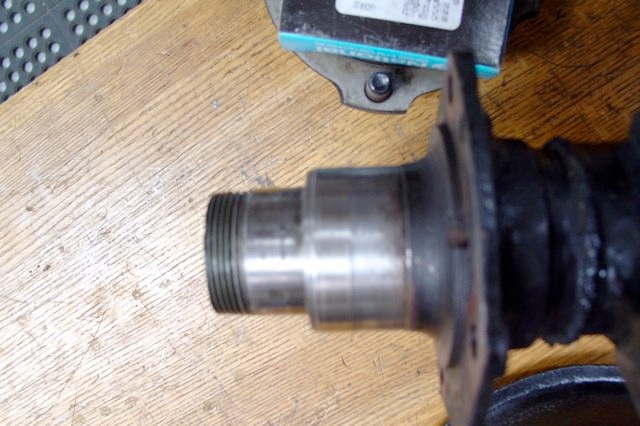
|
- Torn or re-used gasket (half shaft x hub). Min gasket thickness should be 0.010".
- The original O ring that supplements the gasket is 0.115", though a larger dimension could be tried if struggling with leaks.
- Make sure what the leak actually is from: Rear brake cylinders develop leaks (look for fluid around the dust seals), and are cheap to replace ($20). If the liquid is on the brake cylinder and under its dust seals, it is what's leaking. If it is around the hub (not easy for the brake fluid to get there), then the hub seal is leaking. If there is liquid all over everything, then either both are probably leaking, or the half shaft x hub gasket/o-ring are leaking.
- If you have a persistent leak between the axle and its mating surface or at the hub seal, your half shaft might even be bent
- When replacing the bearing, use a 207-FF (double sealed bearing), which then acts as a supplemental barrier against hub seal leak. You can purchase from any foreign auto parts store (also used in Subarus). If using a sealed bearing, be sure to lube the hub seal with some 90W before installing the hub to the axle, because it won't be getting the oil it normally sees. Hub nut torque (not shown in the manuals): 140 ~ 150 ft-lb. This size of Grade 2 nut, diameter 1.5" - 12 threads/inch x 1/4" thick is physically capable of much more (actually, it is capable of more than 900 ft-lb of torque).
- Remember the LH hub nut has reverse thread (same reason as the RH wire wheel nut, but opposite side of the car, because of the rotation direction effect).
- Don't use a hammer and chisel to remove / install this nut. Get yourself an 1 7/8" socket, and if your nuts are really chewed up, replace them (2A7103 RH, 1G3584 LH).