
Brake hoses are there to allow a flexible connection to the brake calipers and drums. This is of course essential since the brake discs and drums are mounted on suspensions designed to move and flex to ensure that all four wheels stay on the road and pointed the right direction. All Spridgets came from the factory with three hoses. One for each caliper in the front and a single one in the middle of the rear axle for both rear drums. Two main types are availible for the spridget. There are stainless steel braided hoses which come clad in braided stainless steel, and there are the more standard rubber brake hoses. Actually, all brake hoses are made up of layers. The following pictures are of the OEM style of hose that would have been installed at the Abbingdon factory.

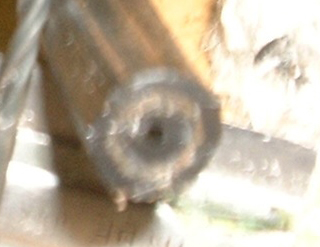
The innermost layer is rubber, surrounded by some rubber impregnated fabric made of nylon or other material. Stanless steel braided hoses are usually made of Teflon or generic PTFE (polytetrafluoroethylene) and are of course wrapped in stainless steel. The hosees are then coated in PVC to protect the steel and the PTFE from chemicals, the elements, and abraision.
In either case, the internal diameter of the hose is actually very small (just about 1/8"). Hoses can fail in a number of ways. The inner layer of the rubber hose can delaminate and collapse forming a one way valve that allows brake fluid to travel to the caliper but not return back up the line. This causes the brake to lock up. The fibers in the fabric can break which would cause the hose to bulge, the pedal to feel spongy, and ultimately the hose would burst. Excessive and prolonged abrasion can also cause failure.