
The clutch hydraultic system on Spridgets (and some other british cars) is hard to bleed. The internal diameter of the clutch lines is larger than that found in the brake system. This makes it easier for air bubbles to move back up the line and means that any time you try bleeding the system in the usual way (pushing fluid out the bleeder screw) you will be fighting against the buoyancy of the air bubbles. It can work but you will need to move a LOT of fluid to get all the air out (especially if the system is dry). This is why pressure bleeding or vacuum bleeding is more effective than simply pumping the pedal
Its much easier to push the air in the direction it wants to go already. By putting fluid IN the bleeder, instead of taking fluid OUT of the bleeder you will force the air into the master cylinder where it will be vented out through the cap. There are a few ways to do this. If you have a pressure bleeder, you can connect the bleeder to the bleeder screw. If you have a squeeze action oil can with a trigger pull, you can fill this with brake fluid and pump fluid in through the bleeder (connect the two with a length of acrylic tubing). Or you can try the following method (suggested by MGA guru Barney Gaylord).
First, obtain about 4-5 feet of acrylic tubing. Use this to connect the bleeder screw on the clutch slave cylinder to the bleeder screw on the right front brake caliper (or brake slave cylinder if you have drum brakes). Open both bleeders. If your car, is an early one with a dual master cylinder (one about 1966 or earlier that has a common resevoir for both brake and clutch systems), just pump on the brake and check the fluid level in the resevoir. Keep pumping untill no more bubbles come out.
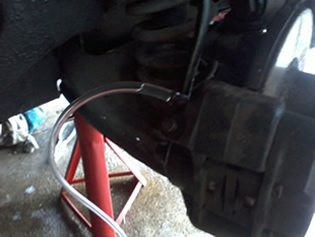 | 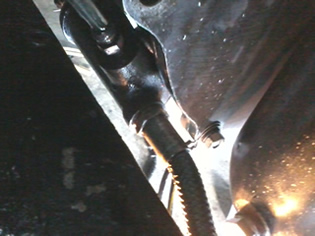 |
| Connection at the caliper | Connection at the clutch slave cylinder |
If your car is one of the later ones with a separite clutch and brake masters, you can modify an old clutch resevoir cap to shunt extra fluid back into the brake master. I drilled the cap and used an old inner tube with a presta valve (cut out a square with the valve stem on it). I learned that presta valves don't work very well for this. Use a schrader valve (more on that later). If you choose to use the valve off an old innertube, cut a square much larger than the opening in the resevoir.
The cap is actually msade of two pieces. It is vented and you might notice a small pin hole in the top off to one side. This is actually where the two plastic parts split. The upper piece presses into the lower. Its designed to allow air in but keep the fluid from sloshing out. Remove the upper piece (you wont need it) and drill a hole in the lower part of the cap. Finally push the vakve through the hole, and tighten the cap cap down on the master cylinder with the innertube sandwitched between the cap and the resevoir so that it seals tightly.
An automotive schrader valve would work even better, and would be simpler to install. Simply pull it through the hole untill it snaps into place. Use what you have on hand.
All you want to do is find a way to attach a tube to the cap that you can use to send the overflow back into the brake master as shown. This way you can cycle the fluid around and push the air out without having to constantly drain the clutch master and refil the brake master. Remember that on dual channel brake masters, the resevoir has a devider. On these you need to be sure that the tubing from the clutch master goes into the front half of the brake master. I used a box end wrench to weigh down the tubing and keep it in position

Final note:, bring the clutch slave bleeder with you to the hardware store in order to determine what tubing is the right size. it should be a tight fit, but not too tough to get on. Also, whatever you use to attach the tubing to the top of your spare clutch master cap, should have an internal diameter at least as large as the bleeder screws, that way you arent introducing any additional restrictions that might cause pressure to build up in the tubing (the presta valve had a very small bore which caused the acrylic tubing to pop off the clutch slave bleeder). A pressure bleeder could cost at least 15 bucks (and thats if you build one out of a garden sprayer). This method costs only about 2 bucks at most in materials (if you have the extra cap lying around).